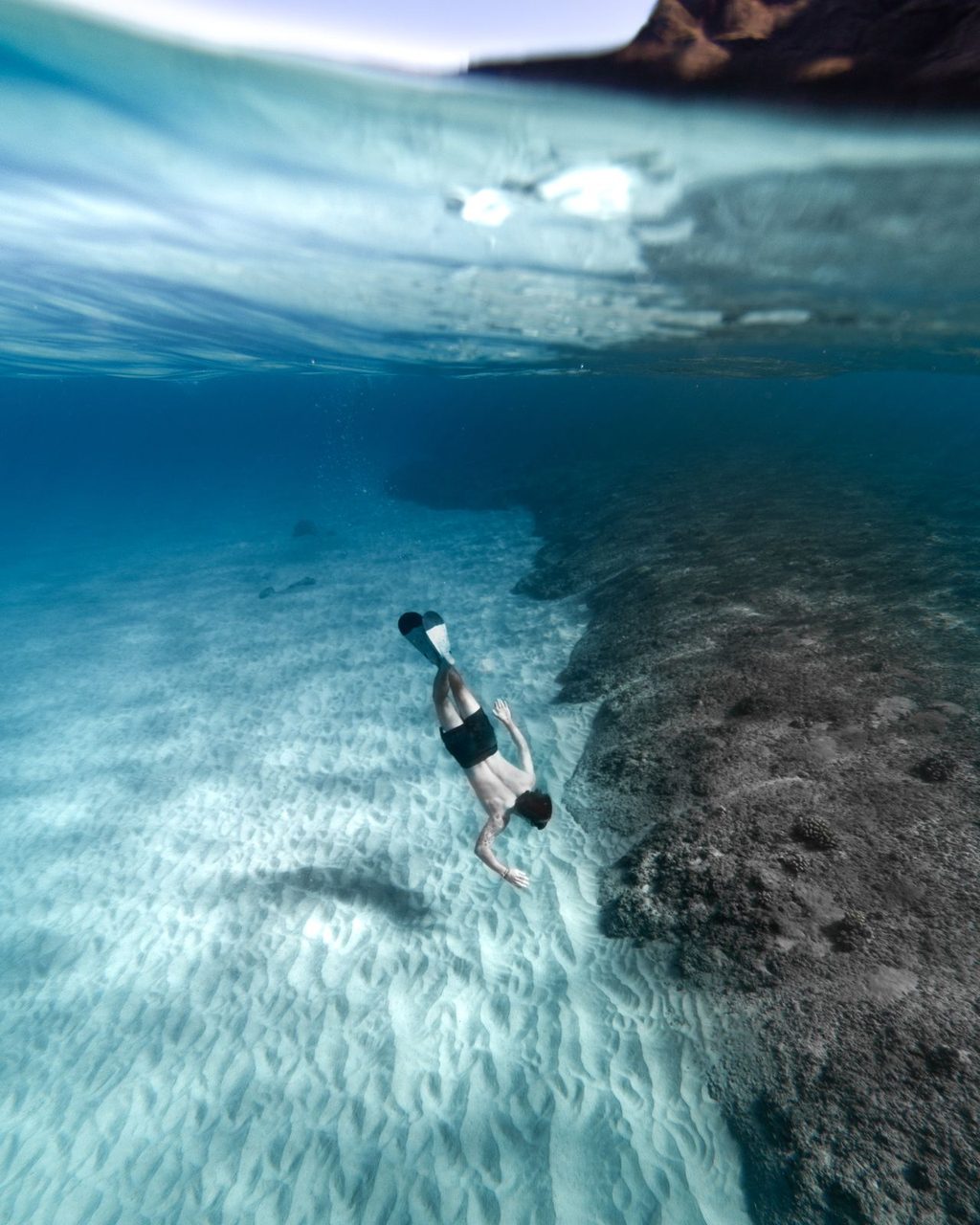
Freediving for beginners: a realistic first-path guide
Freediving grew faster than almost any water sport in the last four years. The number of people actively doing it worldwide passed 7 million in 2025 — up 52% since 2021. That surge is exactly why beginner advice online has gotten noisy. This guide strips it back to what actually moves the needle in your first 90 days.
Quick pick — start here
| First move | Book an AIDA / PADI / SSI Level 1 course at a certified center (not a “try dive” add-on) |
| Skip buying | Most schools rent masks, fins, and wetsuits for the course — try before you pay |
| Non-negotiable | Never dive alone; learn the one-up-one-down buddy rule on day one |
| Budget to plan for | A full beginner kit runs under £200; a quality kit under £500 (Freedive UK) |
The participation boom is real — and so is the safety gap
There are now more than 4,000 certified freediving centers across 62 countries, and the count of certified divers crossed 4.2 million in 2025, up 20% versus 2023. App-based courses alone pulled in 600,000+ new users in 2024. The sport is no longer a fringe hobby — it’s a mainstream coastal pastime.
But here’s the part the Instagram reels skip: roughly 3,200 freediving-related accidents were reported in 2024, and over 60% occurred in regions without regulated training. About 35% of the world’s 4,000+ centers operate with no affiliation to international safety bodies like AIDA or CMAS. The takeaway isn’t “freediving is deadly” — it’s “unsupervised freediving is where people get hurt.”
Placeholder: Ezoic script loads here after site is approved & traffic qualifies.
What you actually need to start
You need far less than the gear walls at dive shops suggest. Across multiple training centers, the consistent beginner list is: a low-volume mask, a simple J-tube snorkel, long-blade fins, a wetsuit, and a rubber weight belt. Most schools provide all of it for the course duration. The single most important item is the mask — low internal volume means less air pushed into the mask to equalize on descent, which saves oxygen.
A proper fit test takes ten seconds: hold the mask to your face with no strap and inhale lightly through your nose. If it seals and stays, it fits. If it doesn’t, no brand name will fix it.
The fins question (and where we go deep)
Fins are where freediving gear splits from snorkeling. Freediving fins run 80–100 cm long and generate more thrust per kick — less effort, less oxygen burned. Entry-level plastic blades cost $80–200 (Cressi, Mares, Beuchat make solid ones); fiberglass runs $200–400; carbon fiber hits $400–800+. We broke the whole category down by stiffness, foot-pocket fit, and price in our fin comparison.
Safety: the number that should reframe your whole approach
Shallow-water blackout — losing consciousness from low oxygen, usually within 5 meters of the surface — is the leading mechanism in freediving fatalities. It’s strongly tied to pre-dive hyperventilation: rapid deep breaths drop CO₂, delay the urge to breathe, and let oxygen fall to dangerous levels before you feel it.
The protective gap between disciplines is stark. Competitive freediving, with medical staff and platform protocols, runs about a 1-in-50,000 fatality rate. Recreational freediving sits near 1-in-500. That ~100× difference isn’t luck — it’s training, buddy systems, and rescue drills. The rule we repeat to every beginner: one calm final breath, never ten rapid ones.
How to pick your first center
With 4,000+ centers out there, affiliation matters. Look for AIDA, PADI, SSI, or Molchanovs certification, a clear buoyancy-and-equalization curriculum, and — non-negotiably — a buddy protocol drilled from session one. If a center can’t tell you its safety line and rescue procedure in plain language, that’s your answer.
About Jonas Reef
AIDA 3-star instructor with 8 years in warm- and cold-water training. BlueHole’s editorial standard: every claim traces to a cert agency, a manufacturer spec, or a peer-reviewed source. Corrections? Email the team.
发表回复