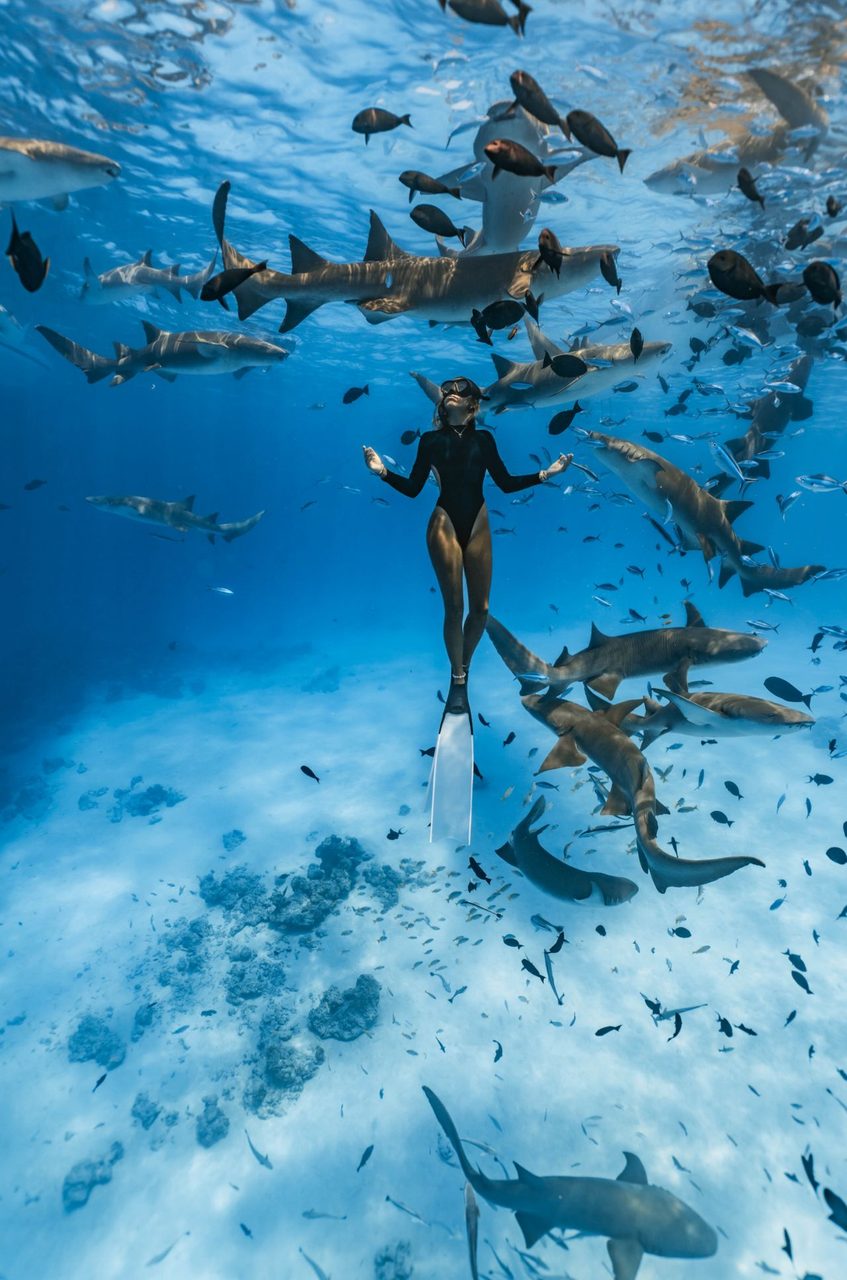
Shallow water blackout: the #1 freediving risk & how to actually avoid it
If you read only one article on this site before your first dive, make it this one. Not the fins. Not the suit. This.
Shallow water blackout (SWB) is the leading cause of freediving fatalities among recreational divers — the people who aren’t competing, aren’t going deep, aren’t doing anything that “looks” dangerous. It happens in the last few meters, often within arm’s reach of the surface, to people who felt totally fine two seconds earlier.
What SWB actually is
A blackout is a loss of consciousness from hypoxia — not enough oxygen in the blood — usually during the final ascent or right at the surface. Here’s the trap most beginners walk into:
Your urge to breathe is driven by CO2 buildup, not by low oxygen. If you hyperventilate before a dive (fast big breaths to “get more air”), you blow off CO2. That delays the urge to breathe — you feel calm and capable deeper than you should. But oxygen is still quietly dropping. Near the surface, O2 crosses the blackout threshold, and you lose consciousness with zero warning. No struggle. No signal.
That’s why it’s called shallow water blackout — it typically happens under ~10 m, often in the last few meters, because that’s where the oxygen finally runs out after a dive.
The numbers (why this isn’t fear-mongering)
Reported incident rates vary by source, but the pattern is consistent across freediving safety analyses:
- Competitive / trained freedivers: roughly 1 fatality per 50,000 dives — they train the protocols below relentlessly.
- Recreational / spearfishing divers (untrained): estimates run far higher, on the order of 1 incident per 500 dives — SWB is the dominant cause.
The gap isn’t luck. It’s protocol. Trained divers don’t black out less because they’re tougher; they black out less because they never dive alone and never hyperventilate.
The rules that keep you alive
These are non-negotiable, not “tips”:
- Never dive alone. Ever. A buddy must keep you in constant visual contact from start to surface. Not “nearby.” Visual. Your buddy’s only job on your dive is to watch your face.
- No hyperventilation. Controlled, slow breathing to relax is fine. Forced fast hyperventilation to “extend” the dive is the single most dangerous habit — it’s the direct cause of most SWBs.
- Ascent slower than your smallest bubble. Your lungs are fullest (Boyle’s law) at the surface; ascending too fast spikes pressure changes. A slow, relaxed ascent lets your buddy see you the whole way up.
- Recognize LMC. A “loss of motor control” (also called a samba) is your body’s last warning — uncontrolled shaking, can’t hold things. It means you’re at the edge. Any LMC = end of session, no arguing.
- Proper breathe-up and recovery. Relax 1–2 minutes at surface, full exhales-then-inhales, before and after each dive. Rushing dives back-to-back is how people get caught.
Get trained — this is where we link courses
Reading an article is not training. The protocols above become muscle memory only through a certified freediving course (AIDA, SSI, or PADI entry levels). A one-day confined-water session teaches you equalization, the breathe-up, and — most importantly — the buddy system under a live instructor.
If you’re considering a course, we link to certified training providers via our Awin affiliate relationship; if you book through those links we may earn a commission at no extra cost to you. But the point isn’t the link: the point is that you take the course before you take the water seriously. See our beginner roadmap for what to expect in your first sessions.
The move
Before you buy another piece of gear: dive with a trained buddy, ban hyperventilation, and book an entry cert. A $200 course beats a $400 suit if the suit’s owner blacks out alone.
About Jonas Reef
AIDA 3-star freediver. Safety content is written to reflect standard AIDA/SSI training doctrine; it does not replace in-person instruction. Always train under a certified instructor before independent diving.
发表回复